A Dog Trainer’s Dream: When a Reactive Dog Finally Relaxes at Home
· BetterDog
A Dog Trainer’s Dream: When a Reactive Dog Finally Relaxes at Home
It’s the first morning of the year. Coffee’s on. The house is quiet.
My phone buzzes.
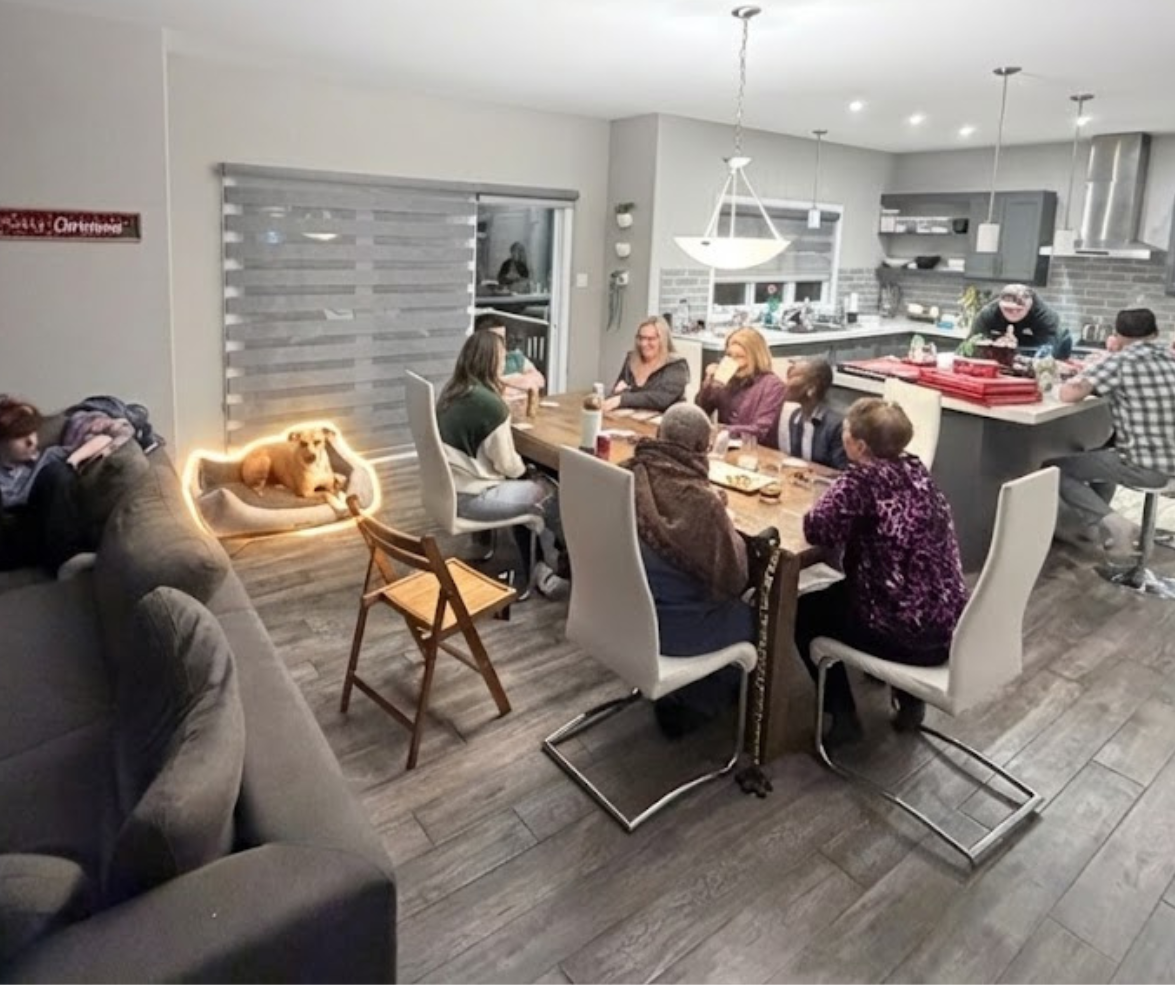
A photo comes in from a client in Ottawa.
If you didn’t know this dog, you’d scroll right past it. Family over. People gathered around the table. Kids slouched low on the couch. Chairs scraping. Someone laughing too loud from the kitchen.
Normal.
But I know what this room used to cost him.
This Is Cooper — and This Room Used to Be Impossible
I met Cooper years ago. He’s one of the very few dogs who has ever bitten me.
Out back, he’d wind up the neighbourhood like it was his full-time job. On walks, he pulled and lunged, scanning the world for problems that hadn’t happened yet.
And yet—alone with his moms?
Sweet. Soft. A total marshmallow.
People were the problem.
When guests came over, Cooper barked and chased anyone who moved. If you sat on the couch, he guarded you. Hands in. Don’t shift your weight. Honestly.
Eventually, people just stopped coming over.
The Photo That Changed Everything
At some point, Cooper’s moms met with a really expensive dog trainer and started doing the work.
A little at first. Then more. Then with real consistency.
Now look at the photo.
Three different groups sharing the same space. Kids sitting lower on the couch. Adults gathered around the table. Movement everywhere.
And where’s Cooper?
Not pacing. Not guarding. Not on duty.
He’s on his bed.
Chilling.
Watching mom lift her phone to take the picture.
This is Green Zone — a dog who no longer feels responsible for managing the room.
From a Trainer’s Point of View, Two Things Matter Most
1) Cooper Isn’t Responsible Anymore
That bed isn’t a command. It’s his safe spot.
One rule that never changes: when Cooper’s on his bed, we leave him alone.
He was up and down through the night, checking in. That’s normal. A dog gathering information. But he knew when to disengage. When to opt out. When not to manage the room.
We didn’t shut him down.
We retired him from a job he never applied for.
2) Cooper’s Moms Learned the Language
They notice the micro-signals now. The pause. The ear flick. The eye roll before tension shows up.
And instead of reacting late, they step in early.
A calm, emotionally clear: “Hey—relax.”
No panic. No hands. No lecture.
Cooper moves on because that moment has been practiced over and over, with consistency.
Clear emotion, delivered early, beats late corrections every time.
Why This Works
Dogs don’t remember events the way we do. They remember how things feel.
For years, people in the house felt like pressure. Responsibility. Too much.
Through structure and repetition, Cooper learned something new:
“I don’t have to manage this.”
That’s how dogs drop out of Yellow and back into Green.
Not through treats. Not through shutdown.
Through trust.
What a damn good way to start the year.