
Reactive Dog Training Ottawa: How Pack Walks Create Calm | BetterDog
· BetterDog
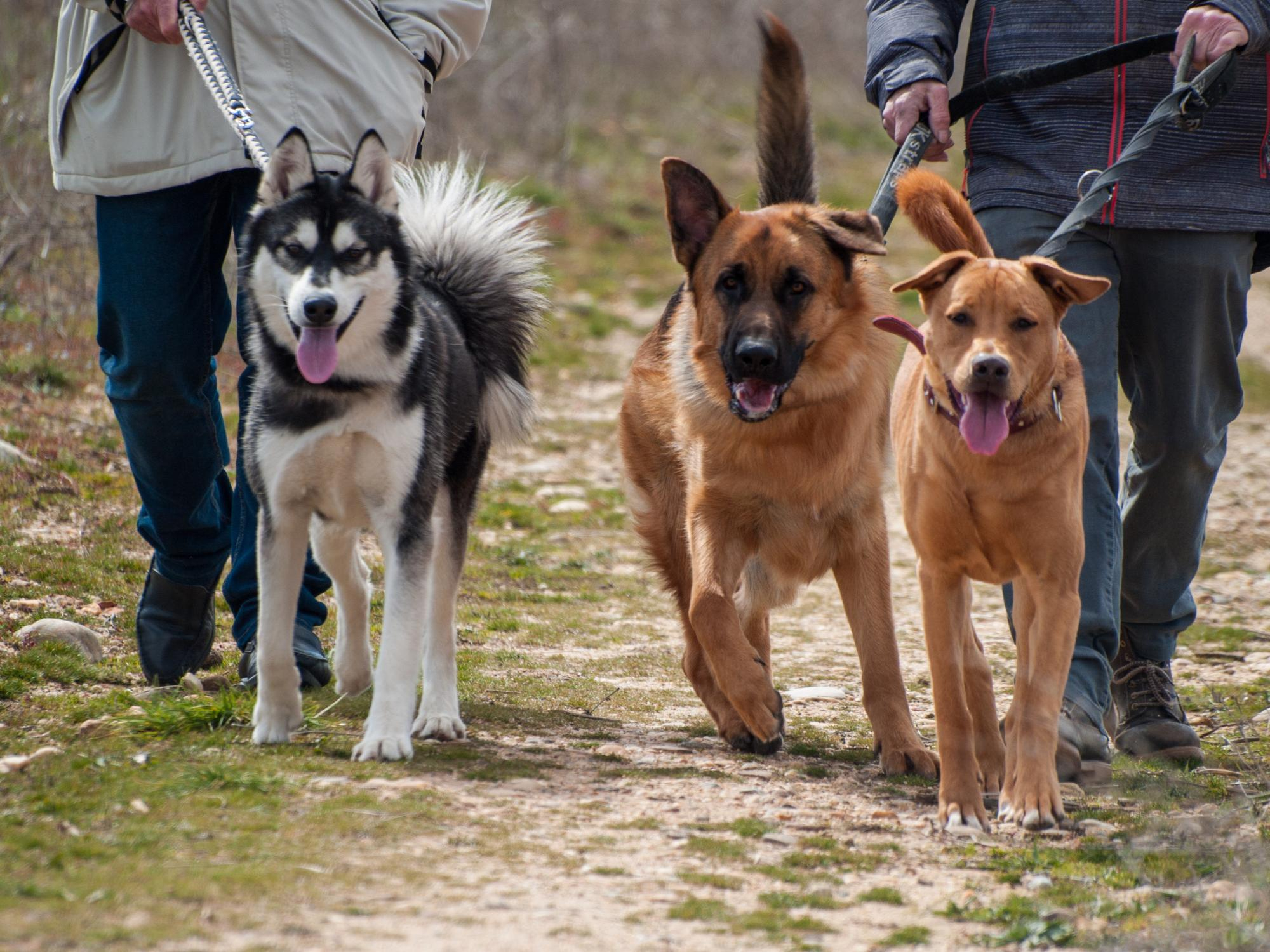

How Pack Walks Transformed Reactive Dog Training Ottawa Dogs Needed
The story of how seven “he might explode” dogs turned Ottawa’s loudest parks into the safest classroom for reactivity — through structure, repetition, and calm leadership.
In-home first. Then Pack Walks. That’s how we support reactive dog training in Ottawa without burning trust.
Picture this: Parc Gamelin in Hull. Geese yelling at the universe, scooters slicing past your ankles, kids hyped on juice boxes — and in the middle of that, seven reactive dogs who think their full-time job is “manage the world.”
That was us. Jon with the quiet, steady leadership. Nancy with the spark and the jokes. Mimi doing her usual “I run this park” lap. We weren’t trying to invent anything. We were just stubborn enough to test something that shouldn’t have worked… but did.
Not in a quiet suburb. Not in a controlled building. Right where the Stress Gauge usually goes from Green to Red in three seconds flat.
We did it anyway. And it didn’t just work — it rewired dogs faster than anything we’d ever seen.
That’s the day Pack Walks stopped being a weird idea and became a new way to do reactive dog training in Ottawa.
🌱Year One — The Weird Experiment That Became a Blueprint
We started with seven dogs whose parents all said some version of: “Just so you know… he might explode.”
Ottawa did what Ottawa does — it handed us every possible trigger in one 60-minute stroll:
- dogs that stare a little too long
- kids sprinting in every direction
- geese yelling their opinions about everything
- bikes, scooters, skateboards, strollers
- that one jogger who always appears out of nowhere
And here’s the twist: the dogs settled faster together than they ever did one-on-one.
In-home training will always be where we start. That’s where we see your dog’s honest behaviour — the Stress Gauge patterns, the doorbell chaos, the “I run this house” moments. That’s where we teach the language: Emotional Marking, boundaries, calm leadership.
But on that first Pack Walk, we saw something new:
In-home training teaches the language. Pack Walks teach the conversation.
🌤Year Two — Opening the Gate Wider
The next spring, we leaned in harder:
- more structure
- more intentional spacing
- a predictable rhythm
- sharper Emotional Marking timing
We planned twelve Pack Walks. Ottawa weather laughed and gave us eight.
Didn’t matter.
Dogs who used to hit Red at the first bike started hanging out in Yellow, then dropping into Green. Parents who arrived anxious left with that quiet, stunned smile: “Did my dog actually just walk past all that… calmly?”
If you’ve ever wondered whether your dog can stay calm around real-life triggers, this is where they learn it.
🚀Year Three — When Ottawa Showed Up
By year three, we’d sharpened the flow:
- Stress Gauge work in real time
- clear Safety Bubbles around every dog
- Emotional Marking at scale — “Hey” when needed, “Good” at every better choice
The numbers as of December 4:
Pack Walks quietly became the safest place in Ottawa for reactive dogs to practice living in the Green Zone — around bikes, geese, kids, you name it.
🧩What We Learned About Reactive Dog Training in Ottawa
1️⃣ In-home training is still king — because home behaviour is honest.
Your living room doesn’t lie. That’s where we see the real Stress Gauge: who your dog barks at, who they shadow, what they think they need to “manage.” We use consent-based training and Emotional Marking to show them: you’re the parent, not the roommate.
2️⃣ Neighbourhood walks are nice… but inconsistent.
Some days you see no triggers. Some days you get slammed with five dogs, two kids on scooters, and someone with a giant umbrella. Familiar neighbourhood dogs don’t always teach new lessons.
You can’t rewire a behaviour you never get to practice on purpose.
3️⃣ Group training in Ottawa parks closes the loop.
Our parks are basically reactivity gyms:
- geese and ducks along the river
- bikes, scooters, one-wheels
- kids, sports teams, strollers
- joggers appearing out of nowhere
- squirrels — always squirrels
Riverain Park alone can give you 25+ bikes per walk in summer. That’s a lot of reps for one specific trigger.
A reactive dog sees a bike and thinks, “Time to bark like hell.” But in the Pack Walk, they glance around and notice: Diesel isn’t reacting. Ivy isn’t reacting. The pack is calm.
Their brain goes: “…wait, am I not supposed to freak out?”
They choose calm. You mark it — “Good.” Next bike, it’s a little easier. Then a lot easier.
That’s Emotional Marking meeting real-world repetition. It’s how we overwrite old associations without overwhelming your dog.
🐾Two Pack Walk Moments We’ll Never Forget
🧭 Gamelin Park — The 200-Kid Stress Test
Scout & Guides Day. About two hundred kids sprinting straight toward us, weaving through the line like a human tidal wave.
Not one bark. Not one lunge. Not one meltdown. Just a pack of dogs doing what calm leaders had taught them to do: ignore the chaos and stay with their humans.
🦢 Riverain Park — The Goose Gauntlet
Twenty geese strutted beside us like a feathery biker gang, then cut across our path — right in front of fifteen dogs.
Nobody broke. Nobody panicked. We praised like crazy. The geese bailed into the river. The pack stayed calm.
🌟Why Pack Walks Work for Reactive Dogs
Dogs don’t learn from lectures; they learn from emotion and repetition. Their brain is always doing this math: “When I feel this and do that… what happens?”
Pack Walks give them:
- Healthy peer pressure — “Oh… we’re all being chill about this bike? Got it.”
- Structure — predictable patterns, clear Speed Limits, human leadership up front.
- Real triggers, safely repeated — bikes, geese, kids, joggers — all under consent-based guidance.
In-home training builds the language. Neighbourhood walks build confidence. Pack Walks weld everything together.
2026: Pack Walks. Every Sunday. Year-round. Ottawa and Gatineau — let’s go.
Calm is taught in motion, together, one emotionally marked rep at a time.
Ready to rewrite your dog’s reactivity story?
We start in your living room, then bring you into the Pack Walk once the language is clear.
Start with in-home training, then join the Pack Walk when they’re ready.