
Travelling With Your Dog in Ottawa | Safe Car Travel Tips | BetterDog
· BetterDog
Travelling With Your Dog: Safe, Calm Car Rides Start Before the Engine Turns Over
Travelling with your dog is not just about getting from one place to another. It is about keeping your dog secure, calm, and protected in the real world.
Travelling with your dog should not feel like managing a furry little emergency every time you grab your keys.
But for a lot of dog owners in Ottawa–Outaouais, that’s exactly what it becomes.
The dog paces. Pants. Whines. Barks at every moving thing outside the window. Climbs toward the front seat. Launches out the door the second it opens. And if the dog is loose, one hard brake or one bad collision can turn that chaos into something far worse.
Jon and Nancy came from the insurance industry. We’ve seen too many reports where dogs were tossed, trapped, or ejected in crashes. That image stays with people. It should.
At BetterDog, we care about more than getting your dog from Point A to Point B. We care about helping your dog travel in the Green Zone—calm, thinking, and secure—while giving you a travel routine that works in real life, not just in theory.

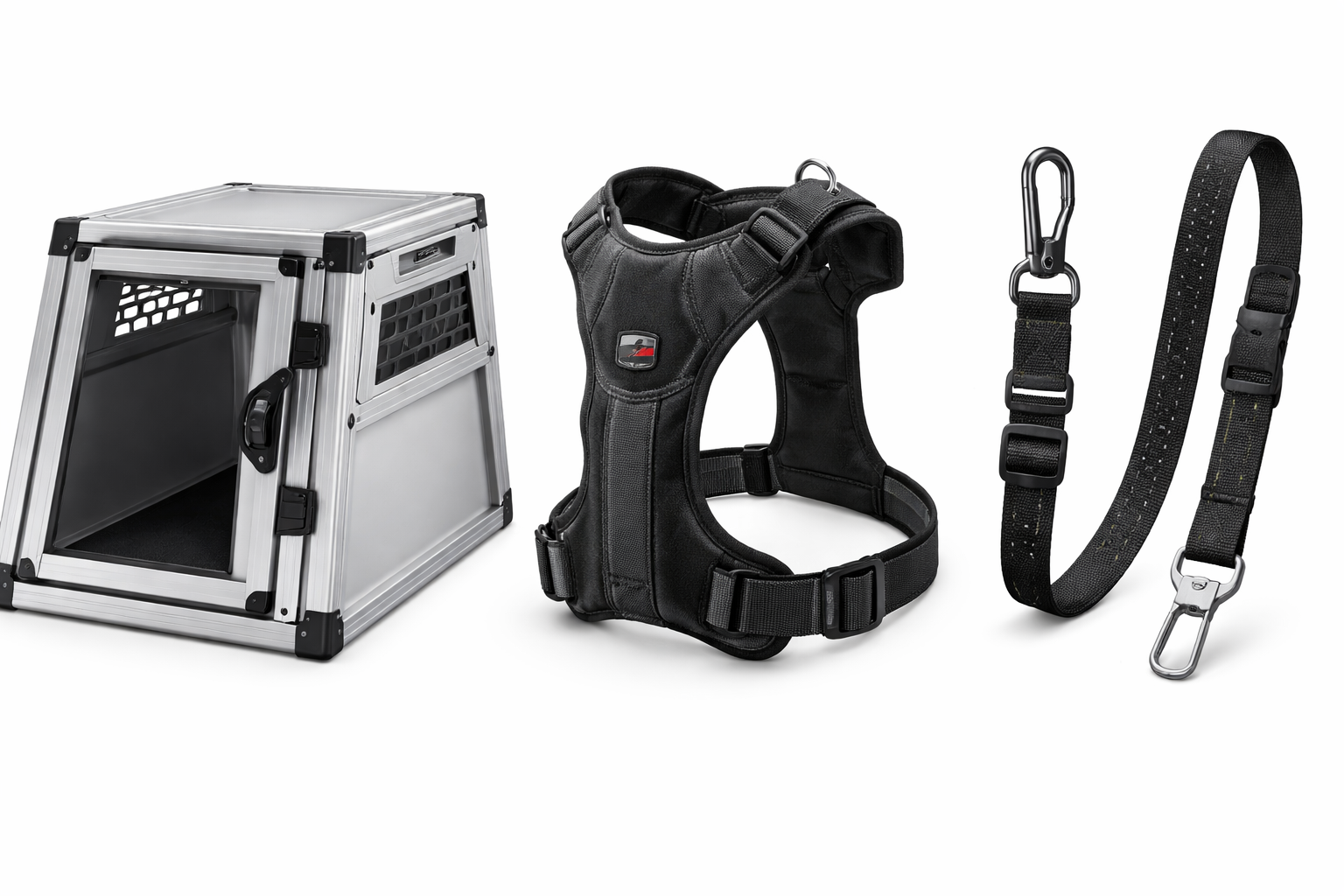
A proper car harness reduces movement and helps keep the dog secure in a collision.

A well-built crate in the rear cargo area offers containment, safety, and a calmer travel setup for many dogs.
Why Some Dogs Struggle in the Car
From a human perspective, it’s “just a ride.”
From a dog’s perspective, it can be a rolling box of noise, motion, vibration, visual triggers, and uncertainty. Dogs learn through emotional association. If the car has ever predicted stress, motion sickness, frustration, over-arousal, or an unpleasant destination, your dog can start feeling it before you even back out of the driveway.
That’s why you see:
- pacing
- panting
- whining
- barking at every dog, cyclist, or squirrel outside
- trying to crawl into the front seat
- exploding out of the vehicle the second the door opens
This is exactly where the Stress Gauge matters.
A dog in the Green Zone can think, listen, and settle. A dog in Yellow is alert, busy, and getting twitchy. A dog in Red is not learning—they’re surviving. A loose dog in a car usually has too much freedom, too much stimulation, and too little structure.
The Real Goal: Not Just Restrained — Secured, Settled, and Safe
A lot of owners hear “dog car safety” and think, buy a seat belt.
That’s not enough.
Your dog should be physically secured, behaviourally settled, and emotionally prepared for the ride.
- protecting your dog in a collision
- preventing them from becoming a projectile
- reducing driver distraction
- preventing frantic exits and escapes
- helping the dog feel safe enough to relax
Safe travel is not just about hardware. It is also about habit.
What Is the Safest Way for a Dog to Travel in a Car?
Best Option: A Crash-Designed Crate, Properly Secured
For many dogs, especially medium and large dogs, the safest setup is a vehicle-specific, crash-conscious crate that is anchored properly in the cargo area of an SUV, wagon, or hatchback.
Why crates work so well:
- they provide full containment
- they reduce the dog’s ability to pace, scramble, or fly forward
- they help prevent escape after a collision
- they often reduce visual overstimulation for anxious or reactive dogs
- they create a clear “travel job” for the dog: get in, settle, ride, wait for permission
Not all crates are equal. There is a big difference between a car-impact-focused crate, a standard hard airline-style crate, and a wire crate.
A 60 lb dog in a high-speed accident creates brutal force. Weak doors, weak panels, poor anchoring, and lightweight materials can fail. So yes, crate hierarchy matters.
Crate Hierarchy for Travel
- Best: crash-designed vehicle crate
- Next: sturdy hard-sided crate or carrier
- Weakest: wire crate
Recommended Canadian Crate Builders
Where Should the Crate Go?
For most SUVs and wagons, the best location is behind the back seat in the rear cargo area, secured properly.
- more containment
- less chance of the dog becoming a projectile into the passenger cabin
- less visual stimulation
- better separation from the driver
- a cleaner, calmer loading and unloading system
That said, the crate still has to be anchored properly and sized appropriately for the dog. A great crate tossed loose into the back is still a sloppy setup.
What About Dog Car Harnesses?
A good car harness can be an excellent everyday solution, especially when a crate isn’t practical.
A well-designed dog car harness is meant to:
- use multiple points of contact
- spread force across stronger parts of the dog’s body
- reduce how far the dog can be thrown in a collision
- keep the dog in a more stable travel position
Best Place for a Harnessed Dog
Back seat. Ideally behind the passenger seat.
- safer positioning away from the front airbags
- reasonable visibility to check on the dog
- less interference with driving
- easier curbside handling when loading or unloading
Recommended Harness Options
A proper car harness is not the same thing as clipping a leash or random tether to whatever harness the dog already wears.
What You Should Never Use
Front Seat: Never
Front seat, never.
From a safety standpoint, the front seat is a terrible place for a dog. Too close to the windshield. Too close to airbags. Too easy for the dog to interfere with the driver.
Dog = windshield.
Collar Connectors
Hard no. Use a purpose-built car harness, not a collar.
Loose Dog in the Car
A calm loose dog is still loose. “Usually just lies down” is not a crash strategy.
Wire Crate as Your Safety Plan
Better than nothing? Maybe. Best practice? No.
Barrier-Only Setup
A barrier can help with management, but it is not the same as a true restraint system.
Why Restraint Often Improves Behaviour Too
A good travel setup often helps the dog feel better, not just safer.
A dog with a clear setup—crate or harness, calm loading, predictable routine, and permission-based entry/exit—has a much smaller job:
- get in
- settle
- ride
- wait
- exit on cue
That kind of structure is the canine version of turning off 37 browser tabs in their brain.
The BetterDog Car Protocol: In and Out With Permission
Loading Protocol
- Approach the car calmly
- Pause at the door
- Get eye contact
- Give permission to load
- Secure the dog immediately
- Wait for calm before the car moves
Unloading Protocol
- Park and turn off the engine
- Get yourself organized first
- Leash up if needed
- Get eye contact
- Give permission to exit
- Exit calmly, not explosively
Look in the eyes. Permission to go in. Look in the eyes. Permission to come out.
What About Anxious or Reactive Dogs?
These dogs need more than just equipment.
- more structure
- slower exposure
- better association
- less freedom to rehearse chaos
This is where crates often shine. Less visual stimulation. Less movement. Less chance to escalate.
And it’s why the travel routine should start before the trip:
- practise the harness or crate outside the vehicle
- rehearse loading with the engine off
- sit in the parked car without going anywhere
- do short, boring drives
- go somewhere neutral or enjoyable
- reward calm choices with clear emotional praise
Ottawa–Outaouais Makes This Even More Important
- slush and freezing mornings in Ottawa
- hot summer parking lots
- construction detours
- busy roads around Kanata and Orleans
- fireworks around Parliament Hill
- traffic heading into Gatineau Park
- muddy post-park returns from Bruce Pit or Conroy Pit
A dog who handles a calm Tuesday drive may not handle Canada Day traffic, winter braking, or a packed trailhead parking lot the same way.
What We Recommend to BetterDog Clients
- Never let your dog ride loose
- Best option: a crash-conscious, properly secured crate
- Strong everyday option: a properly fitted car harness in the back seat
- Never attach restraint to a collar
- Never put your dog in the front seat
- Use barriers as management, not as your main safety plan
- Teach loading and unloading as a permission-based routine
- Build calm before the car moves
- For anxious dogs, reduce freedom and increase predictability
Less chaos, more clarity, better habits, safer dogs.
Ready to Make Car Travel Safer and Easier?
If your dog turns every drive into a mess of barking, pacing, panting, scrambling, or bolting, we can help.
At BetterDog, we work with dog owners across Ottawa, Gatineau, and the Outaouais to build real-life routines that make dogs safer, calmer, and easier to live with.
Book Your In-Home Session Learn More About Jon & Nancy See Dog Training Prices in OttawaBuckle yourself up. Buckle your dog up. Every ride.