Why did my dog bite or snap?
· BetterDog


Ottawa–Gatineau / Outaouais dog owners
Why Did My Dog Bite or Snap at Someone? The Warning Signs Most Owners Miss 🐶⚠️
Dog bites rarely come out of nowhere. Most dogs communicate in a clear escalation pattern first — and the real fix starts when you learn to spot the quiet signs before they become a snap or bite.
Quick Answer ✅
Dogs usually snap or bite because they feel threatened, pressured, overwhelmed, cornered, overexcited, or ignored. Most dogs do not bite “out of the blue.” They escalate through stillness, body tension, staring, growling, lip lifting, or air-snapping first. The fix starts with safety, calm structure, better timing, and learning to read your dog earlier.
Jump to 👇
- Why it feels like it happened “out of nowhere”
- The escalation ladder: how dogs warn first
- Why dogs snap or bite
- Jon’s advice: what owners keep missing
- Nancy’s advice: how to start fixing it safely
- Ottawa–Gatineau local context
- FAQ
- Call BetterDog in
“It came out of nowhere…” — probably not 😬
That’s what most owners say after a snap or bite. And fair enough — it feels sudden when you only notice the last second. But dogs are usually communicating the whole time.
The problem is that humans tend to miss the quiet parts: the freeze, the hard stare, the tight mouth, the still tail, the weight shift, the low growl, the look that says, “Please stop.”
What owners often miss before a bite
- Stillness — the dog suddenly stops moving
- Hard staring at the person, dog, bike, or hand
- Ears up / tail up / body tension
- Pulling lips back or showing teeth
- Growling — often an attempt to stop the situation
- Air snapping before contact happens
The escalation ladder: dogs usually warn first 🪜
Dogs communicate clearly in an escalation pattern. Some move slowly up the ladder. Some move through it very fast. But most are not skipping straight to a bite.
Stillness → ears up / tail up / tension → low growl → lip lift / teeth show → louder growl → snap in the air → snap with contact → bite that breaks skin → bite and shake
That matters because a growl is not “bad behaviour.” A growl is often a dog trying to de-escalate. It is your dog saying, “Back off,” “I’m uncomfortable,” or “Stop.”
The real issue 🎯
If your dog had to snap or bite, they likely felt their earlier communication did not work. That is why the goal is not just “stop the bite.” The goal is to notice and respond before your dog gets there.
Why dogs snap or bite 🧠
Dogs bite to change something. They want distance, relief, space, control, or an uncomfortable situation to stop.
Common reasons dogs snap or bite
- They were touched unexpectedly
- Someone entered their circle of trust too fast
- They felt cornered or trapped
- They were protecting space, food, toys, or a person
- They were in pain
- They were already emotionally loaded and tipped over
- They learned that softer warnings do not work
Dogs with strong emotions can move through that escalation very quickly. Sporty, intense, high-drive dogs can go from aroused to reactive in seconds if nobody helps them regulate.
That is why BetterDog focuses so much on staying in Green — calm enough to think, process, and respond — instead of waiting until the dog is already in Red and reacting.
Jon’s advice: the bite was not the first message 👀
A dog does not usually go from “nothing” to “bite.” You just missed the earlier communication, or misunderstood what it meant.
What Jon wants owners to understand
- Where your dog is looking is often what they’re thinking about
- If your dog is growling, they are often trying to stop the pressure without using teeth
- If your dog snaps, that is often a warning shot
- If the signs happen fast, your dog may be carrying too much adrenaline already
Humans use human logic. Dogs do not. A cyclist on the Riverain path may think, “I’m allowed to be here.” The dog may think, “You came in hot, ignored my space, and now I need to warn you off.”
That does not make the behaviour acceptable. But it does make it understandable. And when behaviour is understandable, it becomes trainable.
Nancy’s advice: safety first, then calm rebuilding 💛
Step 1: start with safety
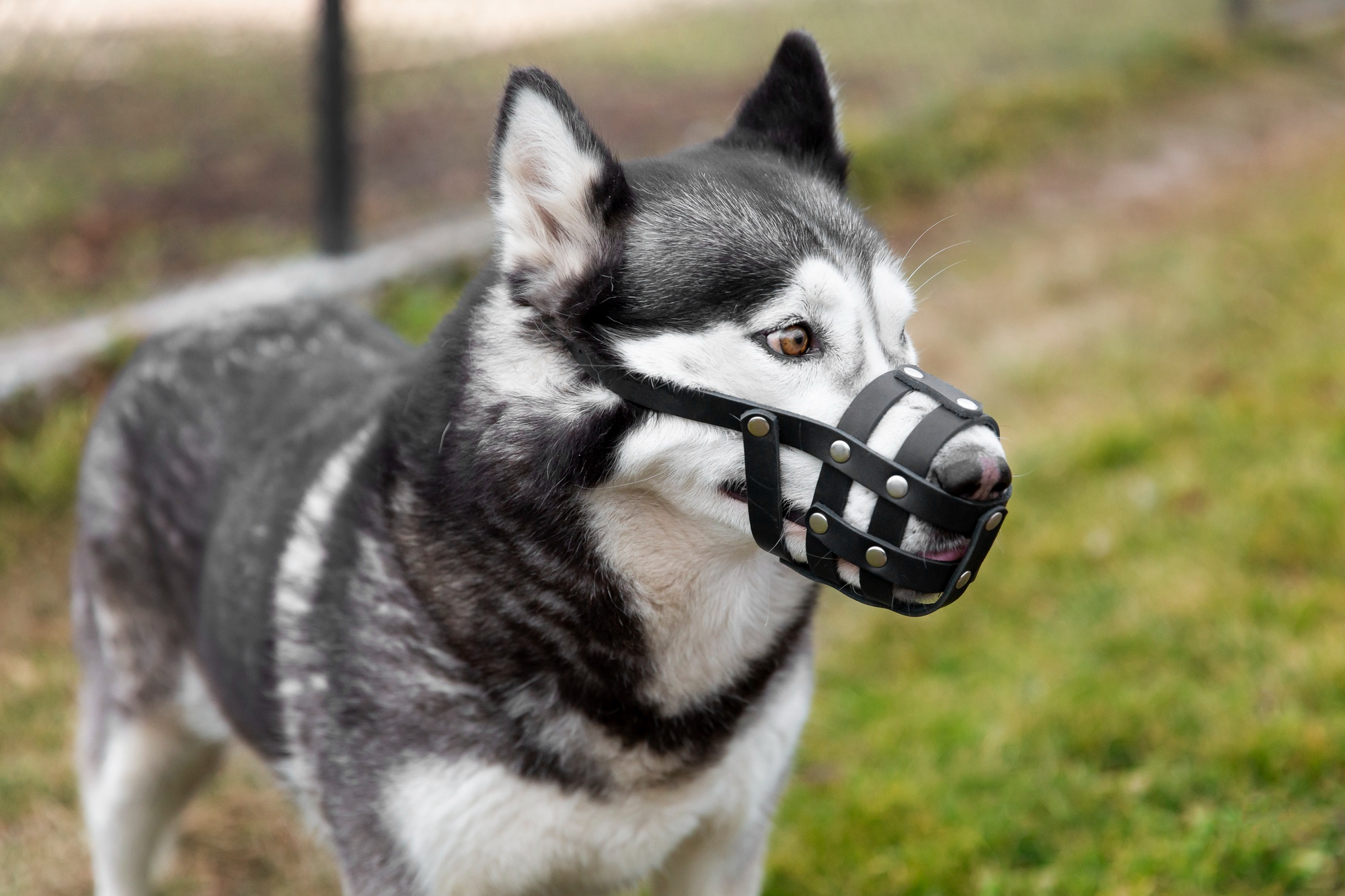
If your dog has snapped, made tooth contact, or bitten, safety comes first. That often means a properly conditioned muzzle.
A muzzle is not punishment. It is a safety tool that protects people, protects your dog, and removes the risk while real training happens.
Step 2: stop rehearsing the problem
Do not keep putting your dog into the same loaded situations and hoping for a different result. No forced greetings. No “let’s see how he does.” No crowded setups just because the dog has a muzzle on.
- No dog parks
- No surprise reaches from strangers
- No chaotic social pressure
- No pushing through warning signs
Step 3: train calm, not chaos
The goal is not just to suppress the reaction. The goal is to teach your dog how to regulate emotion and come back down.
That often means using a bed or crate as a calm reset space — not as punishment, not as “go away,” but as a way to de-adrenalize, hold position, and return to thinking before training continues.
Simple BetterDog reset plan
- Notice the early sign — stare, freeze, tension, growl
- Lower pressure immediately — more space, less intensity
- Guide back to calm — bed, crate, pause, slower pace
- Resume only when thinking returns
We are not waiting for the dog to “burn it off.” We are teaching regulation.
Ottawa–Gatineau local context 🍁
Real-life bite and snap scenarios often happen in everyday local moments: tight condo hallways, icy front steps, kids running at the park, bikes cutting close on shared paths, or tense greetings outside homes in winter gear.
Common local trigger moments
- Bikes passing too close on the Rideau Canal and Riverain paths
- Visitors entering quickly during winter boot-and-coat chaos
- Kids rushing up during summer park outings near Mooney’s Bay
- Dogs already loaded from Canada Day fireworks stress
The lesson is always the same: don’t judge the moment by human rules. Read the pressure through the dog’s eyes.
FAQ 📌
Can a dog bite out of nowhere?
Usually no. In most cases the dog gave earlier signals, but they were missed, misread, or ignored.
Is growling a bad sign?
Growling is a serious sign, but it is also useful communication. It often means the dog is trying not to escalate further.
Should I punish a dog for snapping?
No. Punishing the warning without fixing the stress underneath can make the dog more dangerous next time by teaching them to skip the warning.
Should my biting dog wear a muzzle in public?
If there is real risk, yes — with proper conditioning. But a muzzle does not mean your dog should be pushed into crowded, high-pressure situations.
Can this be fixed?
Often yes, but it starts with management, safety, calm leadership, and a plan built around your dog’s actual triggers.
Call BetterDog in 🏠
If your dog has snapped, growled, air-bit, or bitten someone, don’t keep guessing. We coach this in your actual home and real routine — where the warning signs, pressure points, and patterns are happening.
Today’s micro-step: Start observing your dog before the reaction. Look for stillness, tension, staring, and body changes. The earlier you notice it, the more options you have. ✅