Protecting Your Dog’s Paws: The Winter Warrior's Guide
· BetterDog
Winter Dog Paw Care in Ottawa Boots, wax, salt & simple routines
Keep paws healthy through Ottawa winters — without turning your dog into a fragile houseplant. This is practical protection + natural resilience, in the real world (slush, salt, condo walkways and all).
It’s -18°C. The sidewalks are white with salt. Your dog takes three steps outside… and suddenly they’re hopping like the pavement turned into lava.
Ottawa winters aren’t gentle. Between rock salt in Centretown, chemical de-icers in Barrhaven, and icy condo walkways in Kanata, your dog’s paws take a beating. The goal isn’t to bubble-wrap them — it’s to build resilience and step in only when the environment crosses the line from “toughening up” to “damaging.”
Why Winter Is Hard on Your Dog’s Paws
Winter creates three main stressors:
- Salt + chemical de-icers (dryness, irritation, burns)
- Ice abrasion (micro-cuts, cracks)
- Extreme cold exposure (pain, reduced circulation, frostbite risk)
Salt doesn’t just dry pads — it can cause micro-cracks. Cracks lead to licking. Licking leads to infection. Once that cycle starts, you’re managing damage instead of preventing it.
Featured Snippet Answer: How do I protect my dog’s paws in winter?
- Inspect pads regularly
- Use paw wax or boots when needed
- Rinse salt off after walks
- Dry thoroughly
- Moisturize only if cracking appears
How to Tell If Your Dog’s Paw Pads Are Tough or Sensitive
Every dog’s paws are different — even within the same neighbourhood.
Tough pads
- Thicker, textured surface
- Rare cracking
- Comfortable on snow, gravel, crusty ice
These dogs adapt quickly. Minimal intervention.
Softer or calloused pads
- Smoother surface, often pinker tone
- More sensitive to salt
- Calluses that can crack in dry, cold conditions
These dogs do better with a plan — especially during peak salt season.
Salt, Ice & Chemical Burns: Ottawa-Specific Risks
Some areas get hit harder than others. Condo boards often over-apply de-icer to avoid slips. Busy sidewalks get salted constantly. Translation: your dog’s feet may be walking through a chemical bath 2–3 times a day.
Watch for:
- Excessive licking right after walks
- Redness between toes
- Small cracks or bleeding
- Sudden refusal to keep walking
If you’re stepping over slush near Lansdowne and your dog suddenly stops — that’s information. Not “stubborn.” Information.
Should You Use Dog Boots in Winter?
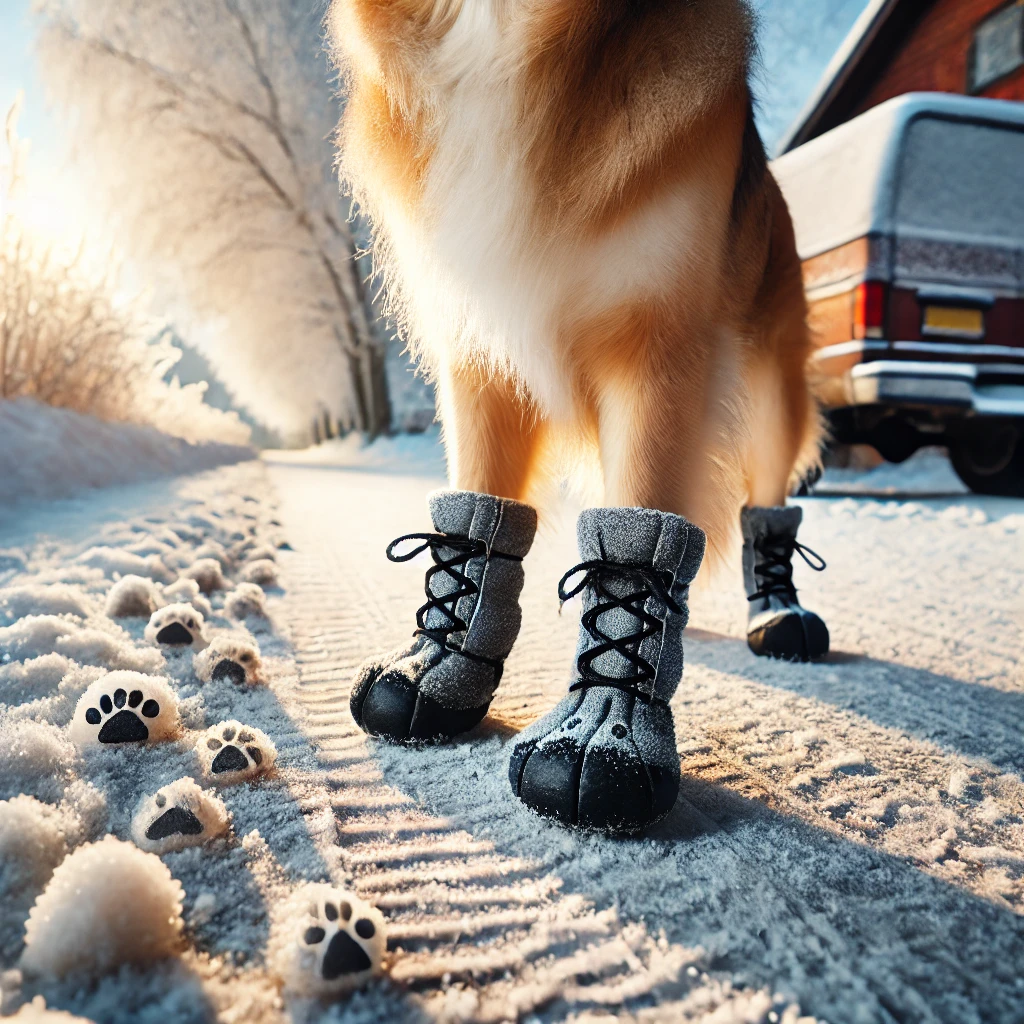
Boots aren’t about fashion. They’re about environment.
Boots are smart if
- You walk in high-salt urban zones
- Your dog is lifting paws repeatedly
- You’re seeing cracks or raw skin
- You live in a building with treated walkways
Boots may not be necessary if
- You mostly walk in deep snow or low-salt parks
- Your dog has naturally tough pads
- You rinse + dry consistently
What to look for in boots
- Suspenders (avoid ankle constriction and slipping)
- Breathable materials (reduce sweat build-up)
- Flexible sole (natural movement)
- Secure fit (snug, not tight)
Dog Paw Wax: Does It Actually Work?
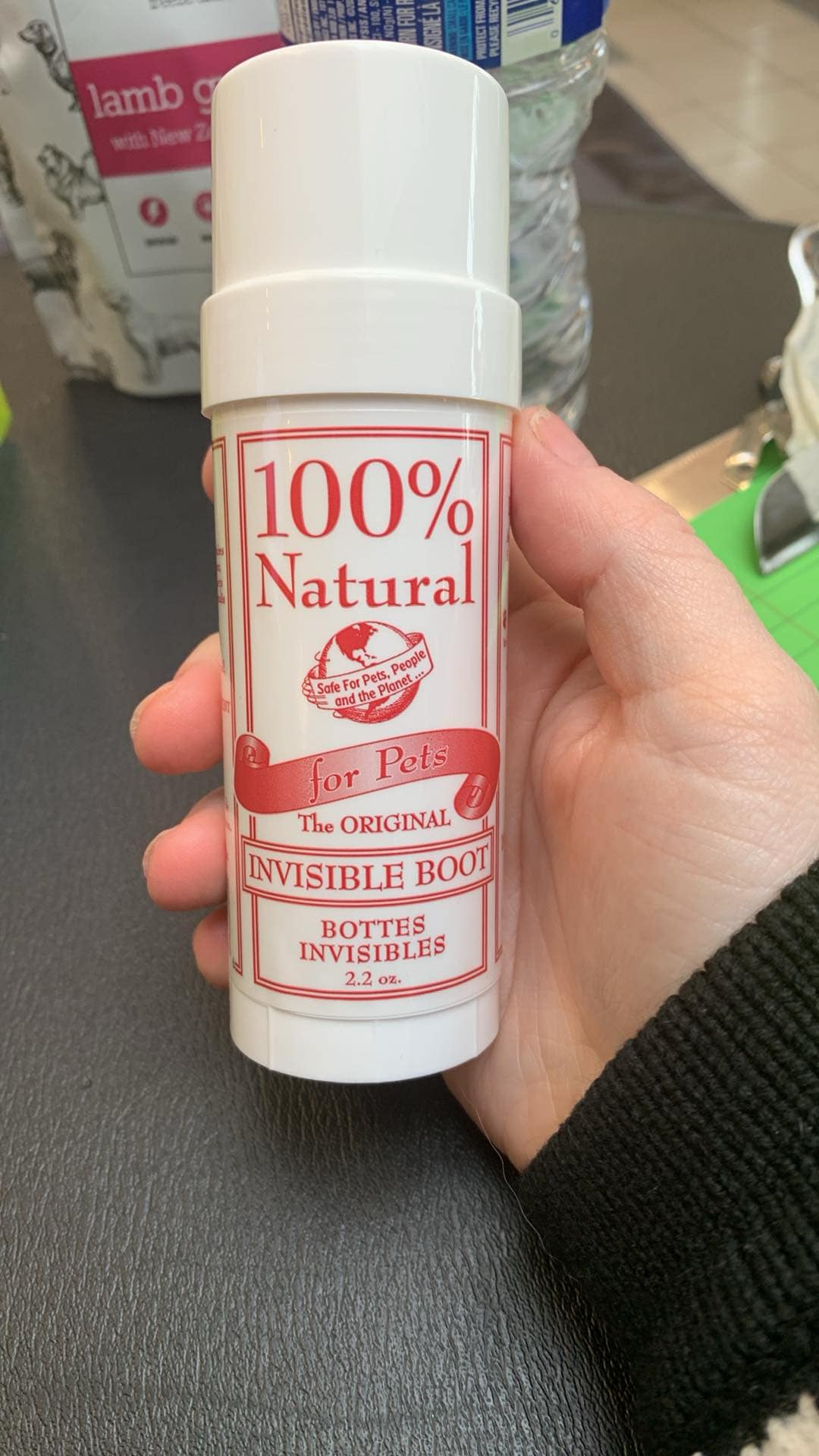
Yes — when used properly. Wax (like Musher’s Wax) can create a breathable barrier that helps reduce ice and salt contact.
How to apply wax properly
- Apply a thin layer right before leaving
- Don’t waste the “fresh wax steps” on your floors
- Cold air helps it set up outdoors
- After the walk: rinse + dry (reapply only if needed)
Post-Walk Paw Care Routine
This is where most owners lose the plot. The routine is boring — which is why it works.
Inspect → Rinse → Dry
- Inspect pads and between toes for cracks, redness, ice balls
- Rinse with lukewarm water to remove salt and grit
- Dry thoroughly (between toes too)
Moisturizer is optional — and only if cracking is present. Too much softening reduces natural resilience.
Signs of Winter Paw Damage
- Deep cracks
- Persistent limping
- Bleeding
- Swelling
- Obsessive licking/chewing of paws
If irritation lasts more than 48 hours or your dog is clearly painful, call your vet. That’s not “tough love.” That’s just smart.
Do This Today (Low-Overwhelm Plan)
- Check paws tonight
- Put a towel by the door (make it automatic)
- Do one short “salt exposure” walk
- Watch for licking after
FAQs About Winter Dog Paw Care
Do dogs really need boots in winter?
Not always. Boots are situational. Heavy salt + chemical exposure often justifies boots. In deep snow or low-salt trail conditions, wax may be enough for many dogs.
Is road salt bad for dog paws?
Yes. It can dry and crack pads and irritate skin between toes. Rinsing and drying after walks reduces risk a lot.
Can dogs get frostbite on their paws?
Yes — especially with prolonged exposure in extreme cold or windchill. If your dog starts lifting paws or slowing down, shorten the walk and warm them up.
How do I treat cracked paw pads in winter?
Rinse salt off, dry thoroughly, and use a light dog-safe balm only when cracking appears. If cracks are deep, bleeding, swollen, or painful, contact your vet.
Is paw wax (like Musher’s Wax) effective?
Yes. A thin layer applied just before leaving can form a breathable barrier that helps reduce ice and salt contact.
Winter Training Matters Too
Winter doesn’t just stress paws — it amplifies leash pulling, reactivity, and indoor chaos. When sidewalks shrink and space tightens, behaviour gets exposed.
If your dog struggles with winter reactivity, door rushing, leash chaos, or anxiety spikes indoors — we handle it in your home and in your real neighbourhood routines.
Book a Life Changer Session — we’ll build a winter-ready routine that actually holds up outside.
Book Online → Read Ottawa Reviews →Quick Checklist
Before the walk
- Quick pad check (cracks? redness?)
- High salt area? Boots or wax
After the walk
- Rinse salt off
- Dry between toes
- Balm only if cracking exists
Ottawa Reality
Salted sidewalks + condo de-icer are usually the problem — not “weak paws.” If your dog is hopping, licking, or refusing to walk, treat it like data.
If winter walks are turning into chaos (pulling, reactivity, barking at doors) — we’ll fix the foundation.
Book a Life Changer Session → See This Week’s Pack Walk →